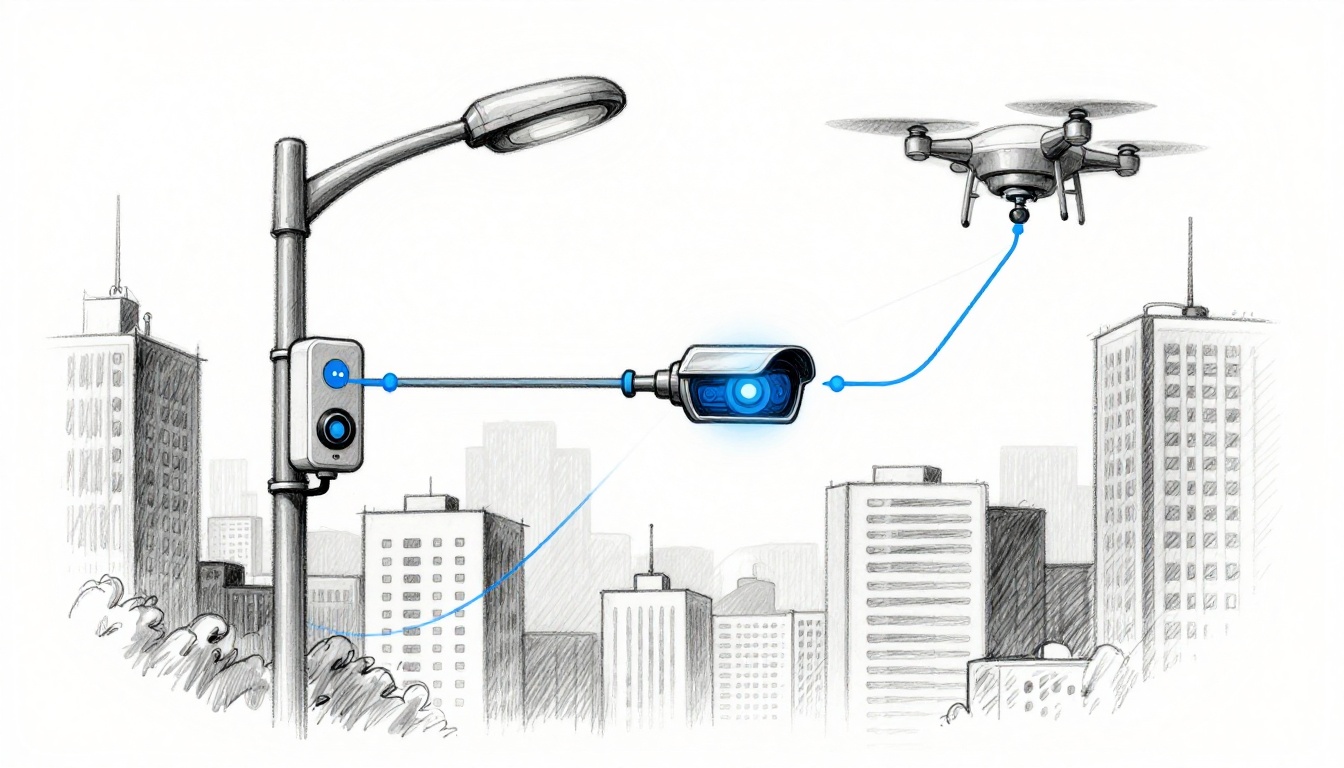
Have you ever dodged traffic, searched for parking, or checked your local air quality on your phone? Those moments feel normal now, but they happen because smart cities use sensors that you never notice.
Smart cities are urban areas that use technology to improve daily life, from cleaner air to faster emergency response. The magic is mostly quiet. Sensors collect signals from roads, buildings, utilities, and the environment. Then systems use that data to make better decisions in near real time.
So what types of sensors are used in smart cities? You can sort them into a few main groups: environmental sensors, traffic sensors, safety sensors, utility sensors, and some fast-growing emerging options powered by AI and new networks in 2026.
For context, the US smart city sensors market is projected around $29.34 billion in 2026, and MEMS-based sensors are a big share because they stay small, cheap, and power-efficient. With more cities adding 5G and smarter analytics, the next wave will focus on lower-cost deployments and tighter, hyper-local measurements.
Keep reading to see how each sensor type works, what it measures, and how it can improve your commute, your health, and even your safety, without drowning you in jargon.
Environmental Sensors Keeping Air Clean and Weather in Check
If traffic is the city’s heartbeat, air and weather are its breathing. Environmental sensors help cities measure what people feel every day: air pollution, temperature, humidity, and storm risk. They also support building comfort, street cleaning, and watering plans.
Think of air sensors as the city’s “nose.” They detect harmful gases and fine particles so alerts can go out quickly. When cities use that data well, pollution peaks get addressed sooner, and residents spend less time guessing.
Here’s what you’ll typically find in environmental sensor setups:
- Air quality sensors: detect pollutants (like gases and fine particles) that can trigger health advisories
- Temperature and humidity sensors: help weather stations and buildings adjust heating, cooling, and ventilation
- Gas sensors: monitor emissions or fuel-related risks, including leaks
- Rain sensors: support smarter irrigation and help prevent runoff and flooding problems
Many deployments also focus on community and hyper-local readings. For example, Boston has built an environmental sensor network to expand local visibility into conditions like air and weather signals. You can see details on the program through Boston’s environmental sensor network updates.
In 2026, a clear trend is low-cost networks of many small sensors. Instead of one sensor on a tower far away, cities place more units closer to neighborhoods and sidewalks. That matters because conditions can change block by block.
Bottom line: environmental sensors reduce guesswork. They help cities protect health, plan maintenance, and respond to storms with fewer surprises.
Air Quality Sensors Fighting Urban Smog
Urban smog isn’t one thing. It’s often a mix of gases, dust, and fine particles that build up when traffic, heat, and weather line up. Air quality sensors measure the specific pollutants that drive those health risks.
Most city air monitoring uses a mix of:
- Gas sensing for common pollutants and odors related to combustion or industry
- Particle sensing for fine dust that can enter lungs deeply
When cities track this data in near real time, they can do more than post daily reports. They can trigger alerts for parks, schools, and high-traffic areas. They can also support rules that reduce pollution at the times when it spikes.
There’s also a feedback loop. Better measurement can strengthen data-driven policies. When decision-makers can show how pollutant levels change after a traffic or emissions policy, they can adjust faster and waste less money.
If you want technical context on how sensors work in IoT systems, see the broader review in Sensors on IoT systems for smart city sustainability (systematic literature review). It’s more academic than practical, but it helps explain why sensor design, placement, and calibration matter.
Temperature, Humidity, and Rain Gauges for Smarter Weather Response
Weather sensors sit at the center of everyday services. A smart city does not just want forecasts. It needs on-site signals to control systems during the next hour, not just next week.
Temperature and humidity sensors support:
- Building HVAC control (for comfort and efficient energy use)
- Public works decisions (for icing risk and material timing)
- Indoor air quality monitoring in schools and care facilities
Then there are rain and storm sensors. These help prevent two big problems: flooding and waste. For instance, if a street cleaning plan assumes dry weather but rain starts early, crews can waste time and resources. The same idea applies to irrigation.
Two simple sensor approaches you’ll hear about are:
- Conductive types that detect moisture by measuring conductivity changes
- Disk types that detect water presence using surface behavior
Meanwhile, humidity and temperature data can also influence flood risk models. If the city gets heavy rain plus warm wet ground, runoff patterns can shift. Sensors help systems adjust those models sooner.
Bottom line: weather sensors help cities respond in the moment. That can mean safer streets and less wasted water.
Traffic Sensors Smoothing Out Congestion and Parking Woes
If you want a quick way to feel smart city tech, traffic is it. Traffic sensors reduce congestion, improve signal timing, and support smarter parking. They also cut idling, which helps both air quality and driver stress.
A good mental model is this: traffic signals need “eyes.” Traffic sensors provide the eyes by measuring vehicles, speed, and flow. Then controllers use those measurements to decide what to do next.
Common traffic sensor types include:
- Proximity and ultrasonic sensors for vehicle detection near intersections and curb zones
- Magnetic sensors (like Hall Effect) to detect cars in lanes or near crossings
- Radar and LiDAR for speed and volume in a more non-contact way
- Traffic counters to estimate how demand changes across time
Some cities also connect traffic sensing to other services. For example, data can inform when to prioritize EV charging during peak demand, or when to adjust routes for heavy events.
One reason this matters: even small improvements reduce “search time.” When parking guidance is more accurate, drivers cruise less. That means fewer slow turns, fewer wrong turns, and smoother lane merges.
In Los Angeles, a large-scale system using loop detectors and automated signal control reported travel time improvements. The deployment evaluation is summarized in Los Angeles’s traffic surveillance and control system results. It’s a useful example of how sensor coverage can pay off.
Bottom line: traffic sensors help cities run signals like a thermostat. Adjusting based on what’s happening right now beats guessing.
Radar and LiDAR Eyes on the Roads
When a sensor tracks vehicles without touching the road, it tends to be easier to maintain. That’s one reason radar and LiDAR get more attention in modern deployments.
Radar can estimate speed and detect movement by analyzing returned radio waves. It works in many weather conditions and can handle mixed traffic.
LiDAR uses light pulses to build 3D measurements of the scene. Because it sees shapes and distances, it’s useful for more detailed understanding, like lane-level counts.
Cities use these tools for:
- Smarter signal control (adaptive timing)
- Safety alerts (like unexpected slowdowns)
- Traffic counts for planning (construction, detours, and event scheduling)
Magnetic and Ultrasonic Helpers for Parking Spots
Not every sensor needs to “see” far. Some just need to confirm presence with high confidence.
Magnetic sensors (including Hall Effect designs) often detect whether a vehicle is in a space by sensing changes from a metal presence. This can make them helpful in parking-lot loops or embedded detection points.
Ultrasonic sensors measure distance by sending sound pulses and listening for echoes. In parking setups, they can confirm whether a spot is empty without needing a camera view.
The benefit is simple: the guidance becomes more reliable. When drivers trust the data, they spend less time driving around looking for the last open spot.
Bottom line: magnetic and ultrasonic sensors keep parking detection practical, even where budgets or installation constraints limit camera coverage.
Safety Sensors Watching Over Streets and Buildings
Safety sensors help cities detect problems early, not after they grow. That includes threats like fires and gas leaks, plus hazards like crowd surges and vibration from equipment failures.
A smart city’s safety system often combines multiple signals:
- Motion detection (to notice unusual movement)
- Accelerometers and vibration sensors (for impacts and structural clues)
- Audio sensing (for alerts tied to sound patterns)
- Video analytics (for faster interpretation)
Some cities also build centralized response centers. When signals flow quickly to dispatch teams, response can get faster and more organized.
Picture a city event, a concert, or a busy sports night. Crowds shift. People move toward exits. A sensor network can spot odd patterns sooner. Then alerts reach staff before a small issue becomes a big one.
Motion Detectors and Smart Cameras Spotting Trouble Early
Motion detection can work with or without video. Common approaches include:
- Capacitive sensing, which can detect changes in touch or proximity on certain surfaces
- AI-driven camera analytics, which can recognize motion patterns and flag events for review
Smart cameras do more than “record.” In many deployments, models help categorize what the camera sees, then send alerts when something fits a risk pattern. That reduces the amount of manual monitoring staff need to do during long shifts.
However, the best safety systems don’t rely on one sensor. They pair motion signals with other clues, like vibration, door contacts, or local audio thresholds.
Bottom line: early detection means earlier action, even if the city never has to escalate to a major response.
Fire and Leak Alerts Saving Lives and Property
Fire safety in smart cities often starts with basics: detect smoke, heat, or unusual gas levels fast. Leak detection sensors matter too, especially for natural gas, fuel, or chemical storage areas.
In practical terms, a smart safety system can:
- Trigger alarms when thresholds are exceeded
- Notify facility staff immediately
- Shut down systems automatically in higher-risk zones
- Log events for faster follow-up after incidents
Water leaks are also a major issue. Pressure changes can signal a pipe break long before a flood spreads across floors.
These alerts reduce damage. They also lower risk for people in nearby buildings and on adjacent streets.
Bottom line: safety sensors help cities respond in minutes, not hours.
Utilities Sensors Saving Water, Energy, and Waste
Utilities are where smart city sensing often pays off financially. Utility sensors track resources like water, power, steam, and waste movement. They also detect failures early, before they turn into expensive repairs.
When a city reduces waste, it helps residents too. Lower energy and water use can mean lower bills and better service reliability.
In many deployments, the goal is “measure, then control.” Sensors measure the state of a system. Then the city adjusts operations to match demand.
This includes:
- Leak and pressure monitoring to stop water loss
- Tank and level sensing to prevent overflow and run-dry issues
- Smart grid and lighting control tied to real power needs
A common outcome is better energy management. Instead of running equipment at the same output all day, systems can change output based on sensor data.
Pressure and Level Monitors Preventing Waste
For water and wastewater systems, two sensor categories show up again and again.
Pressure sensors help spot leaks, pump failures, or blocked lines by measuring how pressure changes. If a pump cycle behaves differently, operators can investigate sooner.
Level sensors track how full a tank or reservoir is. Some use float mechanisms, while others rely on non-contact methods like ultrasonic distance sensing. The design choice often depends on space, environment, and maintenance needs.
When these sensors work together, they prevent two classic outcomes:
- Pipes and tanks that fail silently
- Overflow events that damage property and spread contamination
Bottom line: utility sensors protect both the city’s infrastructure and the resources people count on.
Emerging Sensors Set to Revolutionize Urban Life
Sensors are still evolving. The next wave focuses on smaller, cheaper hardware, plus faster analysis at the edge.
In 2026, several trends stand out:
- Edge AI: sensors can send summaries, not raw data. That cuts bandwidth and can improve response time.
- Better low-power sensors: more deployments stay running on small batteries, or even energy harvesting setups.
- 5G connectivity: more devices can report in near real time, which helps traffic, safety, and utilities coordinate.
- Digital twins supported by sensors: cities can model how changes affect real systems, using data from the street and buildings.
There’s also interest in specialized sensors for health, air chemistry, and safer building operations. Flexible and wireless sensing can reduce installation work and extend coverage in hard-to-reach places.
On the market side, this growth is not imaginary. US smart sensors are projected around $29.34 billion in 2026, and MEMS-based sensors play a major role because they’re power-efficient and sensitive.
For a deeper technical look at where sensor technologies are going in smart city IoT systems, the IoT sensors systematic literature review on MDPI and PMC is a solid starting point for trends and challenges. It also highlights why data quality and fault detection matter.
Bottom line: emerging sensors will make city services more local, more responsive, and easier to scale.
Conclusion
Smart cities run on feedback. And sensors are the feedback, from the “nose” of air monitoring to the “eyes” on roads and the watchfulness of safety systems.
Environmental sensors track air, weather, and pollution. Traffic sensors reduce delays and improve parking detection. Safety sensors help spot hazards early. Utility sensors prevent waste and keep services reliable. Then emerging sensing and faster AI analysis bring smarter decisions closer to where problems happen.
The biggest takeaway is simple: these systems work best when they connect. That way, one sensor signal can inform another response, across departments and services.
Now think back to the hook. The next time you dodge traffic or check air quality, remember what’s behind it: types of sensors used in smart cities that turn everyday life into measurable, improvable data. If you want to stay ahead, watch local projects, ask how sensors are deployed, and support smart city efforts that prioritize real results for residents.