
The fastest help in a city often depends on data shared between different city departments. When your family needs support, you might contact one office, only to be told to try another. If the departments cannot see the same information, you wait longer.
That delay can show up in small ways, like slower benefit approvals. It can also show up in bigger moments, like emergency coordination during bad weather or a major incident. The good news is that cities are building practical ways to share data safely and use it in day-to-day decisions.
Below, you’ll see the main methods cities use in 2026, a few real examples from across the US, and the common problems that slow sharing down. Then you’ll get a simple set of tips for spotting (or improving) better data practices in your own city.
What Tools and Methods Make Data Sharing Work in Cities
City leaders usually want one thing: the right people see the right data at the right time. To do that, they blend technology with rules. Otherwise, sharing turns into guessing, retyping, or outdated spreadsheets.
Most cities today use a mix of shared platforms, cloud systems, data pipelines, and legal agreements. In addition, many teams now use AI tools and dashboards to make the shared data easier to act on.
Here’s how the pieces fit together in plain terms:
| Method | What it does | Where it helps most |
|---|---|---|
| Hybrid cloud | Keeps sensitive data protected while allowing fast access | Public safety and health records |
| Data pipelines | Moves data automatically between systems | Benefits, permits, and service intake |
| Dashboards | Shows live updates across departments | Traffic, storms, and field work |
| AI tools | Flags patterns and matches needs to programs | Staffing, triage, and planning |
| Shared governance | Sets data rules, ownership, and quality checks | Trust, accuracy, and audits |
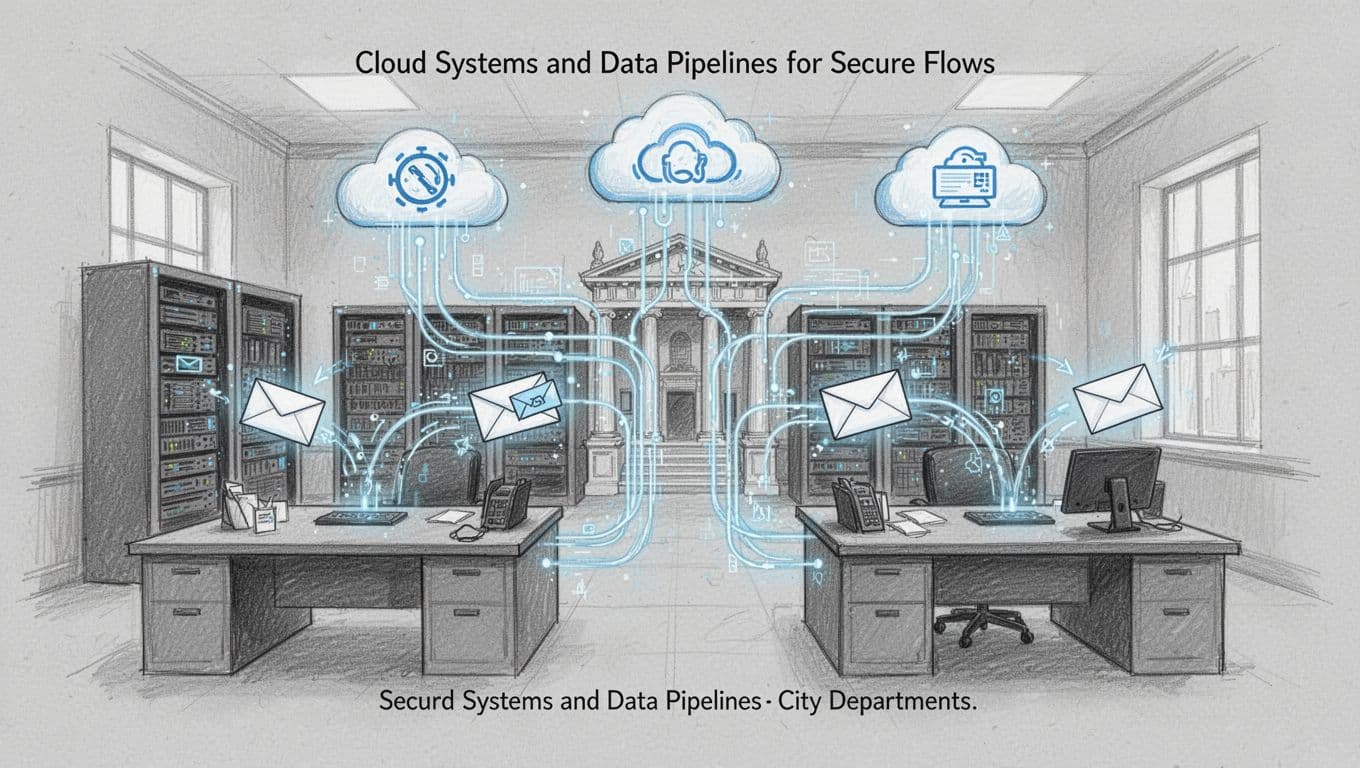
Because every department has different systems, the “pipeline” part matters. A pipeline is like a mail route inside city government. It carries information from one office to the next without relying on someone to copy files by hand.
You can also see this thinking in real city write-ups. For example, see how Nashville improved cross-agency sharing by using GIS and citywide systems in How Nashville learned to share data across agencies.
Cloud Systems and Data Pipelines for Secure Flows
Hybrid cloud is a common starting point. It lets cities store sensitive data in private environments. At the same time, it keeps processing flexible when departments need it. So, data can move quickly, but it still follows privacy and security rules.
Next comes the data pipeline. Think of it as automated “in-city delivery.” When police update an incident, transportation can receive the matching traffic impacts. When housing staff update a household status, community workers can see the same record.
Good pipelines also support privacy. They can send only what’s needed. For example, a department might receive a general eligibility flag, not full medical details. That reduces exposure and helps departments stay compliant.
Importantly, pipelines make AI useful. AI needs clean, consistent inputs. If data arrives late or in mismatched formats, models produce bad results. So cities add validation steps, data checks, and “steward” roles for key datasets.
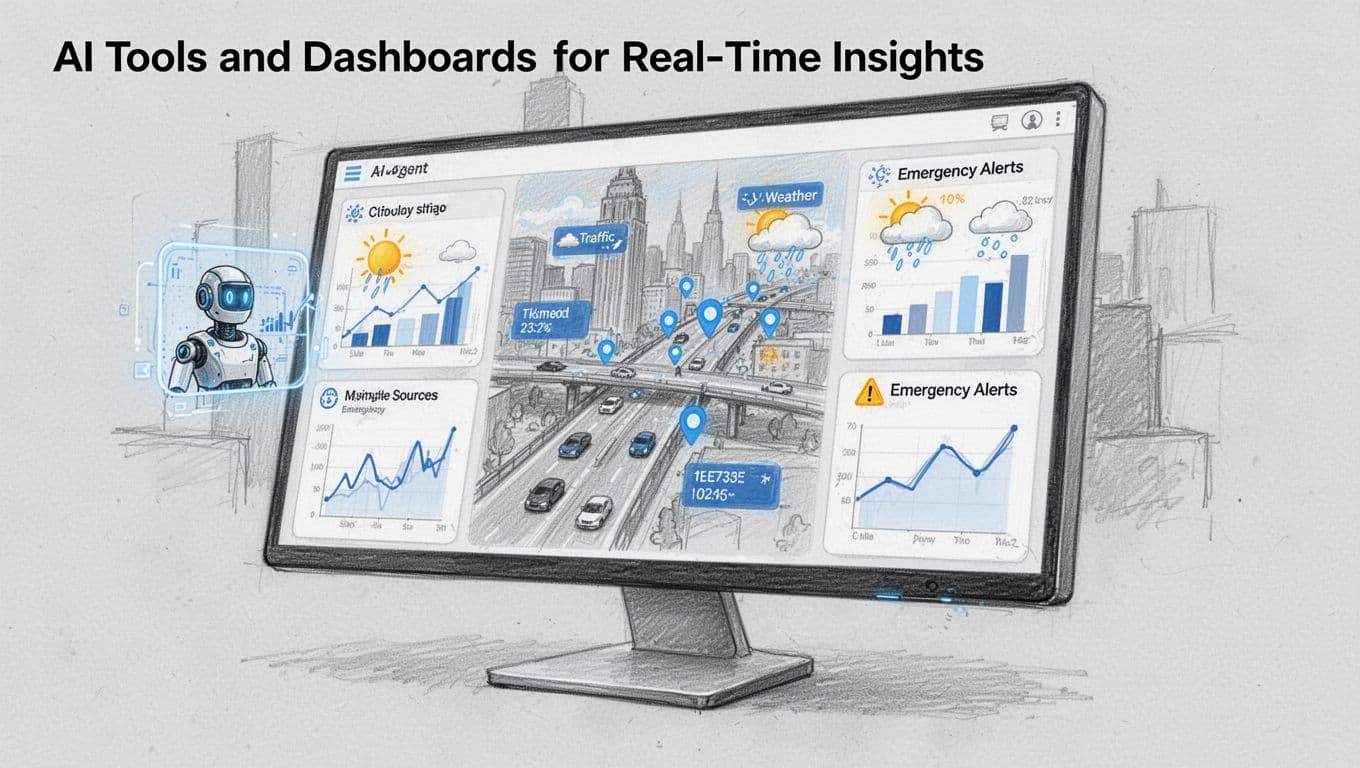
AI Tools and Dashboards for Real-Time Insights
Once departments share data, teams still have a problem: data overload. That’s where dashboards and AI tools come in.
Dashboards give people one shared view. Instead of calling around for updates, staff can monitor live indicators. For emergencies, that can mean seeing road closures next to weather alerts. For service teams, it can mean seeing demand changes by neighborhood.
AI helps in two main ways. First, it can summarize and route information. Second, it can highlight patterns that humans might miss. For example, if multiple departments see rising “needs” signals, AI can help identify where outreach should happen first.
The goal isn’t to replace staff. Instead, it saves time on repetitive work. It also supports consistent decisions, since teams use the same shared inputs.
Real Examples from Cities Getting Data Sharing Right
Cities don’t all share data the same way. Some focus on public engagement. Others start with emergency response. Still, the common theme is trust: departments coordinate and residents can see the outcomes.
Norfolk and Cleveland: Community-Driven Data Events
Norfolk, Virginia, has used neighborhood-facing events to build momentum. One example is the city’s Hampton Roads Datathon pages and related civic efforts, which invite teams to use local data to solve problems. You can see an official example here: 2025 Hampton Roads Datathon.
Why does a datathon matter for sharing between departments? Because it forces real coordination. Departments bring data they own. Residents bring questions about what they actually experience. Then teams build practical prototypes that show how sharing could work in daily operations.
Cleveland, Ohio, takes a similar approach with Data Days Cleveland. This unconference-style format helps departments meet residents and each other, without hiding behind technical language. You can review the program details at Data Days Cleveland.

These events also improve data quality. When residents spot confusing labels or missing context, departments learn fast. Then governance teams can update definitions and improve how data is shared across offices.
Tempe and California: Everyday and Legal Wins
Tempe, Arizona, focuses on everyday access and resident-friendly data. The City of Tempe lists a Neighborhood Data Access program that helps residents and neighborhood groups use city information. See Neighborhood Data Access | City of Tempe, AZ.
This is a sharing win because it keeps information connected to real neighborhoods. It also makes data use a habit, not a one-time project. When departments share data for resident support, they often build the same pipelines later used for internal programs.
California addresses sharing with policy and statewide systems, especially around homelessness. One key resource is the Homeless Data Integration System, described by the California Interagency Council on Homelessness. Learn more via Homeless Data Integration System (HDIS).
Statewide systems matter because homelessness involves multiple services. Health care, housing support, and outreach teams need consistent inputs. Legal and program rules then guide what gets shared, how it gets protected, and how outcomes get measured.
Challenges Cities Face and Proven Fixes
Even when a city wants to share data, problems show up fast. Privacy rules can block certain data types. Old systems can make sharing slow. Bad data quality can ruin analytics. And trust can fall apart if residents feel information is hidden or confusing.
The hardest part is that these issues hit at the same time. You might upgrade tech and still fail due to governance gaps. Or you might write rules and still struggle because data formats don’t match.
Tackling Privacy, Legacy Tech, and Data Quality
Privacy comes first, because city departments handle sensitive info. Different laws can apply to different programs. So, one office might be able to share a dataset, while another cannot.
Legacy systems also slow things down. When departments store data in old formats, pipelines take longer to build. That often leads to partial sharing, like summaries instead of full records.
Data quality is another frequent barrier. If fields are inconsistent, AI tools struggle. For instance, if “address” fields use different rules, matching across departments fails. Then teams lose time trying to reconcile records.
Cities respond by updating contract language and privacy standards. For a local example, the Seattle City Council blog covered a resolution about privacy protections and limiting federal access. See Seattle City Council privacy protections.
Building Trust Through Training and Governance
Fixes work best when governance comes with training. Departments need shared definitions, clear data owners, and simple rules. Otherwise, people improvise, and improvising creates risk.
Many cities also use workshops. Staff learn how to handle data safely. They practice what to share and what not to share. They also learn why the rules exist, so compliance becomes part of the job.
In addition, cities can reduce trust problems with clear tracking. If a resident wonders how their data moves, the city should explain the basics. That transparency builds confidence, even when the full details stay protected.
Finally, pilots help, but real tests matter. Datathons and cross-department workshops can act like dry runs. They show where sharing breaks, before a city rolls out changes at scale.
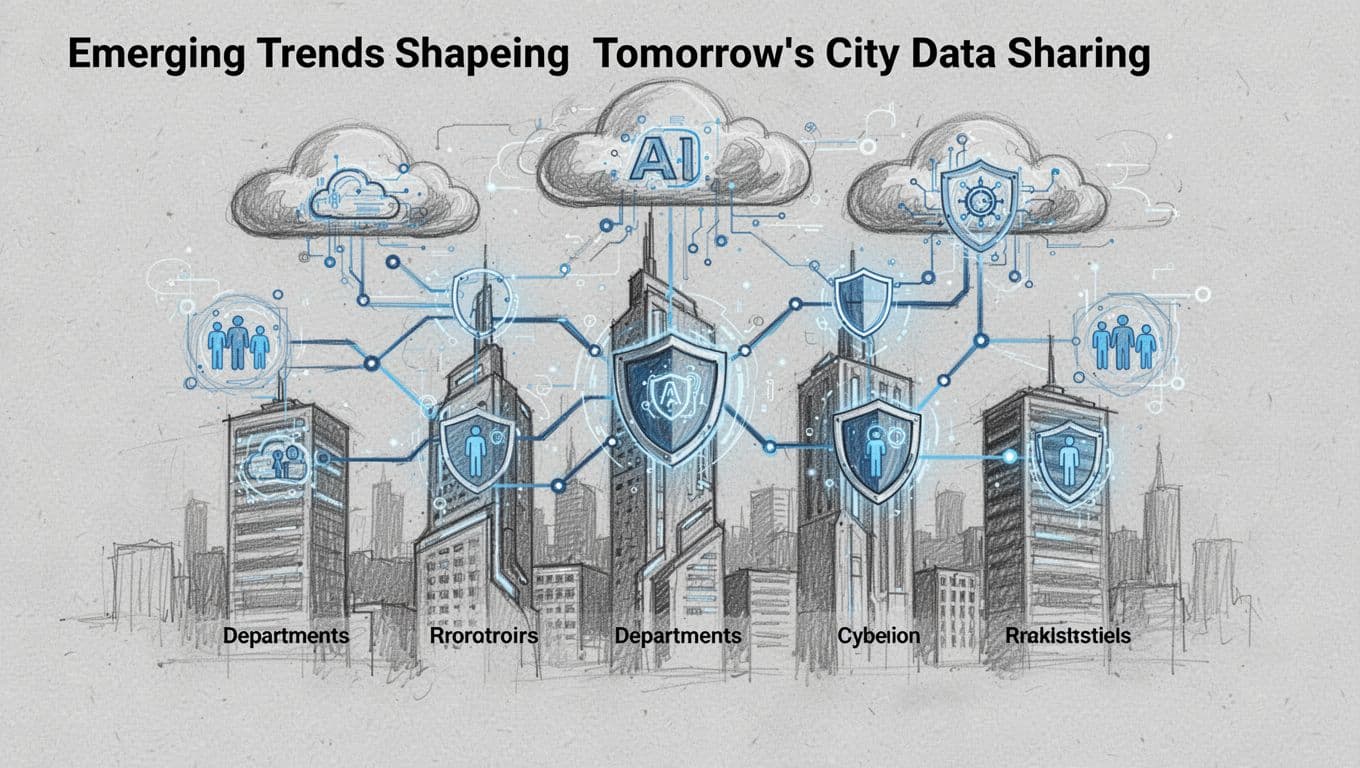
Emerging Trends Shaping Tomorrow’s City Data Sharing
Looking ahead, the trend isn’t just more data. It’s smarter data use, with stronger controls.
In 2026, more cities are using AI in day-to-day work, but with guardrails. They’re also thinking about cyber risk as part of sharing, not as a separate IT issue. When multiple departments connect systems, attackers can target the “bridge” points too.
Meanwhile, cities are moving toward “whole-person” views for services. That doesn’t mean everyone gets everything. It means departments use shared identifiers and consistent records to reduce repeated questions and missed referrals.
Finally, expect more open, public data. When residents can see the basics, it builds feedback loops. That can improve both service planning and data trust.
For a practical view of how AI and cyber threats affect local agencies, the National League of Cities on AI in local government is a helpful read.
Conclusion
When data shared between different city departments works, you feel it in everyday life. You get answers faster. You get referrals that make sense. Staff spend less time hunting for the same record.
Cities that succeed focus on two things: safe sharing and clear rules. They blend hybrid cloud, pipelines, dashboards, and governance, then test ideas with residents.
Want to see how your city is doing? Check your local open data portal, then look for cross-department programs and public dashboards. And if you have ideas, share them. Better data sharing means better services for everyone.