
By 2050, two-thirds of the world’s people will live in cities, so urban life will get busier, hotter, and harder to manage. To handle that pressure, many places are turning to smart cities, meaning they use sensors, AI, and connected systems to improve daily life (think safer streets, cleaner energy, and faster transit).
As of March 2026, recent reports show this shift moving beyond pilot projects, with cities running real operations for traffic control, public safety, and utilities. You also have to weigh tradeoffs, like privacy and cybersecurity, because more data flowing through a city means more risk to handle.
The future of smart cities promises exciting changes, but smart planning is key, and that’s where the story starts next.
Current Trends Turning Cities Smarter Every Day
Smart cities in 2026 are moving from experiments to everyday operations. You can see it in how cities fix problems sooner, cut waste, and respond faster during storms. The common thread is simple, sensors collect data, AI spots patterns, and networks move signals in seconds.
Meanwhile, planners also focus on cost and trust. Better systems reduce truck trips and repair delays. At the same time, privacy and security matter more than ever, since more devices create more risk.
Here are three trends shaping how urban life gets smarter right now.
AI Making City Decisions Faster and Smarter
In many cities, AI acts like a fast-thinking maintenance crew manager. Instead of waiting for a visible failure, it reviews signals from roads, pipes, buildings, and cameras. Then it predicts what might break next, and it schedules repairs before the emergency call arrives.
This shows up in real predictive maintenance work. For example, AI can estimate stress and failure risk in water pipes using patterns found in sensor feeds. It also helps agencies plan when and where crews should work, so budgets stretch further and neighborhoods see fewer disruptions. If you want a clear look at how predictive maintenance is applied to infrastructure, see AI-powered predictive maintenance for government infrastructure.
AI also supports faster emergency handling. When systems combine weather data, traffic flow, and incident reports, they can help operators choose the right response sooner. Some cities run models that flag likely flash flood zones, then adjust traffic routes to keep people moving safely. In short, AI can shorten the time between “something may happen” and “we’re ready.”
A daily-life example is always-on streetlight monitoring. Many modern streetlights and their control cabinets now include sensors and communications. AI uses that data to detect faults, spot outages early, and tune brightness based on real activity. So the city can keep safer lighting where it matters, while reducing wasted power when areas sit empty.
Here’s how that kind of AI decision-making typically breaks down:
- Data collection: Sensors report conditions from the field (light levels, vibration, power draw, traffic presence).
- Pattern detection: Models find signs of trouble that humans might miss.
- Action planning: Systems recommend fixes, route changes, or resource shifts.
- Feedback loop: Results from repairs help improve the next prediction.
Even when the models stay “behind the scenes,” the impact feels straightforward. Roads get repaired faster, emergencies get handled quicker, and day-to-day services cost less to run.

Super-Fast Networks Connecting Everything
Connectivity is the backbone of smart city operations. In 2026, cities rely on 5G for real-time control, and they start designing with early 6G expectations in mind. The goal is not just faster video. It’s reliable, low-delay signals for traffic control, utility monitoring, and waste routing.
For example, a busy street needs instant coordination. Traffic signals cannot wait for cloud calls every time conditions change. Instead, smart controllers pull local data and respond quickly, often with edge computing nearby. In addition, waste pickup depends on sensing which bins fill up, which reduces drive time and keeps streets cleaner.
Private 5G networks also keep growing inside cities. They let agencies and major sites run their own secure wireless systems, which helps when you need tighter control than public coverage offers. Growth has been strong in enterprise deployments, and market research points to a high-rate expansion path for the wider private 5G category tied to IoT demand. For one market view, read private 5G market trends.
If you’re wondering why “private” matters, think of it like owning a building’s internal power system. You still connect to the city, but you control how your critical loads get served. That matters for emergency services, industrial zones, and large public works projects.
Here’s where 5G and the move toward 6G show up in daily operations:
- Traffic management: Sensors detect queues and speed changes, then AI adjusts timing patterns.
- Grid and energy monitoring: Utilities track outages and load spikes before they spread.
- Waste systems: Smart bins report fill levels and help crews plan routes.
- Public safety: Cameras and alert tools share data quickly during incidents.
- Building operations: HVAC and lighting systems sync with occupancy and weather shifts.
You’ll also notice a shift in network design. Instead of relying on one big connection, cities distribute intelligence. They push processing closer to the streets, so decisions arrive fast. As a result, the city can react like a well-trained conductor, coordinating many sections at once.

Greener Living Through Smart Tech
Smart cities also aim to cut pollution, not just improve convenience. In 2026, the green trend looks practical: sensors reduce energy waste, smarter farming brings more fresh food closer to homes, and building upgrades lower emissions.
Start with urban farming. Rooftop gardens and vertical hydroponics are gaining attention because they use controlled light and water. Meanwhile, smart monitoring helps growers track moisture, temperature, and nutrient levels. That means fewer guesswork days and better yields, even in tight spaces. Research on IoT-supported hydroponics continues to show how sensors can support more stable growing conditions. For a technical example, check sustainable urban farming with IoT monitoring.
Then there’s energy. Cities use AI and smart controls to reduce wasted power in street lighting, buildings, and grid operations. For instance, systems can dim lights when traffic drops, adjust heating based on occupancy, and schedule equipment runs for off-peak hours. As a result, you cut costs and emissions together.
Energy savings often come from small changes, repeated at scale. A city might update controls so they respond to real demand instead of fixed schedules. It also helps when utilities detect local losses in power delivery and fix issues earlier.
Eco-buildings support this shift too. Low-carbon designs use efficient insulation, better ventilation control, and cleaner electric loads. Add solar on roofs, heat pumps where it fits, and smart meters, and you get a building that manages itself more carefully. Over time, that cuts both emissions and operating bills.
If you want to picture it, think of a smart city like a thermostat for the whole neighborhood. It senses conditions, adjusts settings, and stops energy from leaking out through inefficiency.
Urban greening efforts often include:
- Urban farms that use sensors for water and light.
- Smart lighting that targets power use during real activity.
- Efficient buildings that reduce heat loss and improve control.
- Cleaner operations through better route planning and fewer wasted trips.
The best part is how this feels in everyday life. Less glare from lights, smoother traffic flow, and parks that stay healthier during hot months. These changes add up, and residents notice them quickly.

Key Technologies That Will Redefine Urban Spaces
Smart cities don’t get smarter by adding one big app. They get smarter because many small technologies work together, then improve day-to-day life. In 2026 and beyond, the biggest shift comes from tools that see the city, predict what will go wrong, and test fixes before crews roll out.
Think of it like a living body. Sensors are the nerves, AI is the brain, and digital twins act like the rehearsal space. When these pieces connect, urban services run with fewer surprises.
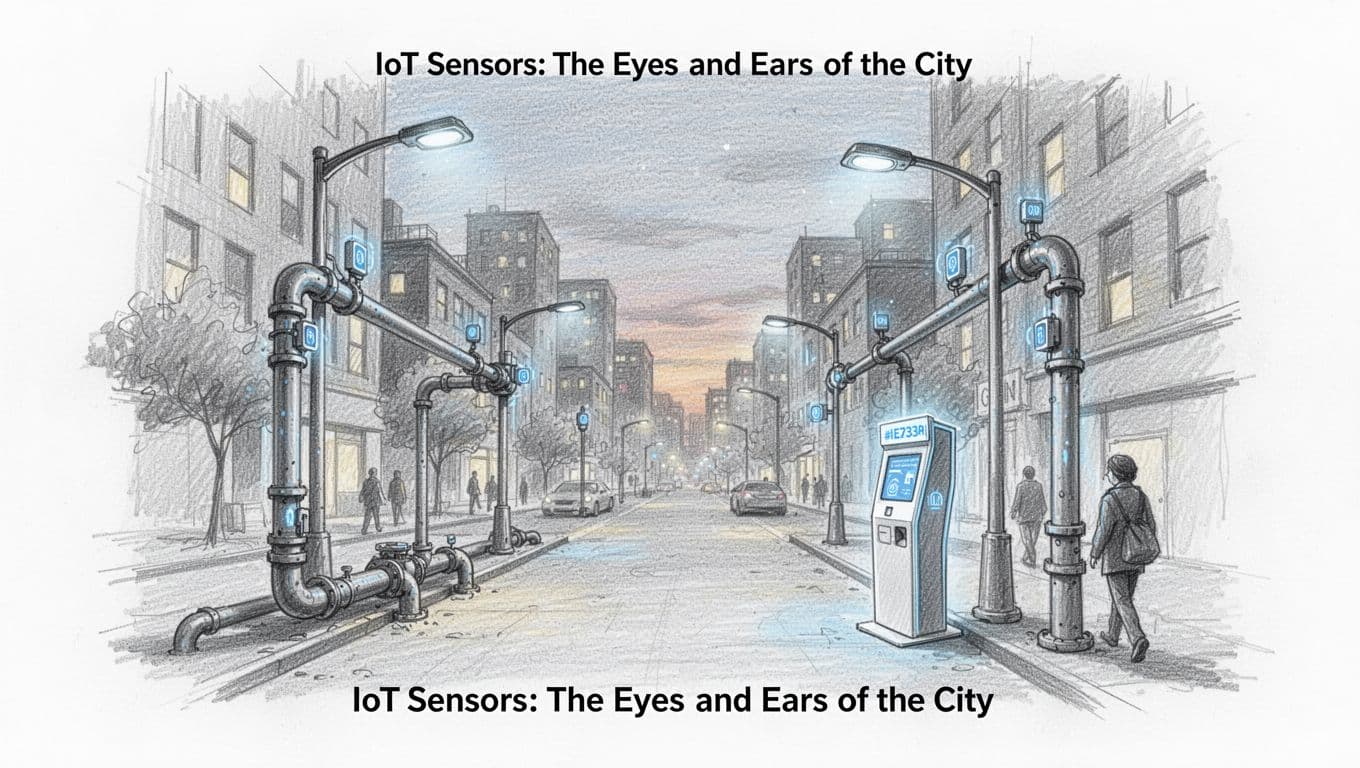
IoT Sensors: The Eyes and Ears of the City
IoT sensors spread across streets, pipes, buildings, and parks. They quietly measure what humans cannot track at scale. As a result, cities catch issues early, reduce waste, and respond faster when something breaks.
In practice, you’ll see sensors used in three everyday areas: lights, water, and health.
First, smart streetlights and roadway systems use sensors to manage brightness and uptime. For example, cities can dim lights when roads are empty. At the same time, they can flag a failing fixture before it creates a dark block. This matters for safety, because visibility changes how people feel walking at night.
Second, water monitoring sensors help cities protect clean supply. They can detect leaks, check water quality, and spot pipe pressure changes that signal trouble. When crews get alerts quickly, they fix problems sooner and reduce lost water.
Third, contactless health monitoring is becoming more common in shared public spaces. Sensors track air quality and noise levels, so cities can identify hotspots for pollution. In places like parks, systems can also watch conditions that may affect crowd safety after hours.
Here is what “everywhere sensing” often looks like on the ground:
- Street assets: light poles, traffic equipment, and sidewalk lighting cabinets
- Utility networks: water pipes, pump stations, and pressure points
- Public health signals: air sensors, noise sensors, and environment monitors
- Support services: smart bins, bridge checks, and building comfort controls
A good example is how cities build sensor networks to track environmental conditions. Boston’s new environmental sensor network shows how municipalities expand monitoring to understand local impacts better.
AI and Machine Learning: Predicting Problems Before They Happen
Sensors tell you what’s happening now. AI and machine learning help you figure out what’s likely to happen next. In other words, AI turns raw signals into decisions.
For urban operations, this shift changes maintenance from reactive to predictive. Instead of waiting for the next outage, cities analyze patterns from power use, temperature, vibration, and brightness changes. Then they schedule fixes when they still prevent bigger problems.
Streetlights are a clear win case. Many lighting systems already collect data, and AI can use it to forecast failures. For example, when voltage patterns and heat signatures drift, the system can predict a lamp or driver issue. Crews then replace parts before a whole area loses light. That means fewer complaints and fewer emergency repair trips.

AI also supports wider city ops, not just lights. When cities combine traffic signals, incident reports, and weather data, models can recommend response actions. That reduces delays during disruptions like sudden heavy rain or fast traffic build-ups.
A useful way to think about AI in smart cities is as a quality-control layer over operations. It checks for odd behavior, flags likely failures, and helps teams prioritize work. If you want a snapshot of where municipalities are using AI in real time, how cities are using AI in 2026 is a solid starting point.
Digital Twins: Testing City Fixes in Virtual Worlds
Digital twins are virtual models of a city built from real data. They can include roads, buildings, utility systems, land use, and environmental patterns. Then planners test changes inside the model before doing them in real life.
Why does that matter? Because many urban projects fail in the real world due to unknown side effects. Traffic reroutes, construction staging, drainage impacts, and energy demand can all shift at the same time. A digital twin gives you a safer way to ask “what if” questions.
In 2026 and beyond, digital twins help with three main tasks:
- Mobility and traffic planning
You can simulate signal timing changes, new lanes, or detours. Then you estimate delays and congestion risk. - Climate and resilience work
You can model heat waves, flooding, and storm effects. After that, you plan upgrades with fewer surprises. - Infrastructure and growth decisions
You can test how new development changes utilities, energy loads, and service demand.
One of the most important benefits is learning without wasting money. If a plan creates bottlenecks in the twin, you can revise it early. In contrast, changing design after construction often costs far more and causes more disruption.
The best digital twins don’t sit on a shelf. They update with incoming data, so the model stays close to reality. That makes it easier to plan day-to-day operations and long-term investments together.
If you want a real example, ESRI describes how Altamonte Springs uses a digital twin transformation. It highlights how cities shift from static mapping to a living model that supports better decisions.

When you combine sensors, AI, and digital twins, you get a loop cities can trust: measure the present, predict the future, and test the fix. That loop is what will redefine urban living after 2026.
Real-World Examples of Smart Cities in Action
Smart cities are not waiting for some future date. You can see them working now, in systems that manage streets, water, lights, and data centers in real time. When these upgrades land, residents feel it quickly, like a smoother commute or safer walks at night.
At the same time, each country shows a different path. Some move fast through national programs. Others build around energy systems or public safety. Still others improve the basics, like broadband, so smart traffic can actually run.
India’s Massive Smart Makeover
India’s Smart Cities Mission is one of the clearest examples of smart upgrades moving from plans into daily operations. By late 2025 and into early 2026, reporting based on RTI responses described 31 of the 100 selected cities as fully converted, with 43 more near completion. That means the work is no longer just “tech demos.” It’s city management at scale. For one snapshot of the progress, see 31 cities done and 43 nearing finish.
So what did cities actually build? A major theme is online services and real transit control. Many cities installed Integrated Command and Control Centers (ICCCs) that pull data from multiple systems. From there, operators can monitor traffic, buses, and incident response. In addition, they can coordinate other services like utilities and emergency support. Think of the command center like a control tower, not just for planes, but for the whole city.
Transit improvements show up in practical ways, too. Cities improved signal coordination, created smarter traffic management workflows, and used data to reduce delays. When that coordination works, buses run closer to schedule, and congestion becomes easier to manage.
You can also track why online services matter in this rollout. When services move online, residents get less friction. They report issues faster, pay fees with fewer steps, and access city updates in a more consistent way. Meanwhile, city teams get cleaner data for maintenance and response. In other words, online services reduce “lost time,” and transit upgrades reduce “lost minutes.”
Even public safety upgrades tie back to operations centers. Many cities rolled out surveillance and communications support alongside traffic and transit tools, so incidents get flagged earlier. The mission’s results show a simple pattern: once a city can see itself clearly, it can start fixing what hurts daily life most.

Innovations from Korea and the US
Korea and the US offer different smart city flavors, but both focus on something real: systems that improve how people live day to day. In Korea, GS E&C’s Life Weaver approach frames smart cities like living ecosystems. It connects energy, transport, water, and buildings instead of treating each system as a separate project. The idea makes sense. A city runs as one body, so planners need one set of signals.
Life Weaver also ties into GS E&C’s Zero Energy City framework, which aims for renewable power and better energy balance. This isn’t just “add solar panels” thinking. Instead, it pushes energy storage, demand control, and citywide coordination. As a result, the city can cut waste while still meeting daily needs.
At the research level, GS E&C’s work connects with KAIST, Korea’s top science and technology institute. According to reporting on the partnership, the organizations plan research cooperation and a dedicated research center setup for smart city technologies. You can see coverage of the GS E&C and KAIST collaboration in GS E&C working with KAIST. In practice, that means the smart city concept keeps moving from theory into testable systems.
The US example lands on something residents notice fast: street safety and smarter lighting. Ubicquia provides AI-enabled streetlights and related edge tools. Instead of leaving old poles behind, the company focuses on retrofitting and adding sensors and AI where they already exist.
What does that enable? More reliable lighting, plus safety detection that can respond quickly. Ubicquia’s recent growth also points to how public agencies keep adopting this approach. For a clear read on the company’s latest funding phase, see Ubicquia’s $106M funding round (and independent coverage like Ubicquia raises $106M).
Here’s the real-world effect: better lighting isn’t only about comfort. It improves visibility in crosswalk areas and helps reduce safety risk. Then AI camera tools help operators spot issues and support faster incident handling. Some deployments even use license plate recognition workflows to help law enforcement follow leads sooner. In short, the streetlight becomes an information node, not just a light.
However, safety tools still need the right foundation. That’s where broadband funding matters. Smart traffic systems depend on networks that carry sensor data with enough speed and reliability. In the US, the federal government allocated $65 billion under the Infrastructure Investment and Jobs Act to expand high-speed broadband access. While the headline goal focuses on closing connectivity gaps, it also supports the “pipes” smart cities rely on, including data links for traffic and other connected services. For an overview of the broadband investment, see NTIA’s summary of the $65B push.
If you want a sense of how these ideas converge in the market, watch what happens at events. For example, Smart Cities MIAMI 2026 runs on March 26, 2026, and includes an industry expo plus panels on infrastructure, health, and community resilience. You can check the event details at Smart Cities MIAMI 2026 Conference. That kind of gathering is where cities, vendors, and researchers compare notes on what works in real operations.
The bottom line across Korea and the US is simple: smart city progress accelerates when cities connect systems that affect the same outcomes. Energy planning touches mobility. Street safety touches data networks. And broadband upgrades touch everything.

Challenges Standing in the Way of Smart Progress
Smart cities can fix real pain points, but the path from pilot to daily life is messy. Budget limits, old pipes and roads, and tough questions about privacy slow down smart upgrades. Add housing pressure and climate risk, and the work gets even harder.
Below are two big blockers that keep popping up across US cities. If you understand them, you can also see why “smart” plans sometimes move slower than people hope.
Money and Old Infrastructure Holding Things Back
In many cities, the hardest part of going smart isn’t the technology. It’s the bill for fixing what’s already there. When your water lines, traffic systems, and street lighting age together, upgrades become a chain reaction. One weak link can stop the whole project.
Older infrastructure often needs more than “add a sensor.” Roads may need repaving first. Pipes may need replacement before monitoring makes sense. In other words, smart tech can’t fix broken basics on its own. That creates budget strain right away.
Here’s where costs get painful for city leaders:
- Retrofit work: Installing sensors and cables inside active utility corridors takes time and coordination.
- Integration costs: New software still has to talk to older systems and older vendor tools.
- Data and cloud spend: Storing, securing, and running analytics adds ongoing costs, not just upfront ones.
- Staged construction: Crews cannot shut down roads and services as easily as planners want.
You also see pressure from how cities fund projects. Federal support can help, but the timing and rules can change. That makes long projects harder to plan. For a look at how policy and funding discussions affect smart city work, see Smart Cities and Communities Act updates.
Old infrastructure also ties into housing. If a city redevelops neighborhoods to add homes, it must increase capacity too. That means more demand on water, power, transit, and storm drainage. Smart systems can help manage that growth, but they only help if the city can pay to install and maintain them.
So leaders often take a pragmatic route. They start with the areas where aging systems already cause frequent failures. Then they scale once they prove the plan works. It’s not glamorous, but it’s how progress survives.

Even when money arrives, scope control matters. Cities that try to modernize everything at once can get stuck. Meanwhile, targeted upgrades let teams learn faster and avoid costly rework.
Privacy, Equity, and Security Worries
Smart cities rely on data, and residents understandably ask, “Who gets access to it?” Cameras, license plate readers, air monitors, Wi-Fi tracking, and app data can all reveal sensitive details. When cities collect more signals, they also raise the stakes for data protection and public trust.
Privacy worries show up in everyday questions. Can you opt out? Who can view the recordings? How long does the city keep the data? Those questions are not “tech talk.” They reflect real concerns about surveillance and personal safety.
A common problem is what cities call integration. It sounds simple, but it often means connecting new systems to older databases. That increases risk. More connections create more doors for misuse, even if no one intends harm.
Security threats add another layer. Hackers target connected systems because they can cause real-world disruption. An attack on traffic tools can cause gridlock. An attack on utility monitoring can delay repairs. An attack on public safety systems can slow response during emergencies.
In plain terms, smart city cyber risk grows with each connected device. IoT sensors are useful, but they also expand the attack surface. Cities need strong controls like device authentication, encryption, patching, and strict access rules.
Equity is the third worry, and it often gets less attention until residents feel the gap. If smart services depend on reliable internet, not everyone benefits. Some neighborhoods still struggle with slow broadband, spotty coverage, or high costs. That means certain residents get faster help, while others fall behind.
Equity concerns also reach physical access. If lighting upgrades focus on high-traffic blocks, people in quieter areas may see fewer safety gains. If transit analytics guide changes, neighborhoods without strong digital services may still wait longer during disruptions.
Leaders are responding in practical ways that reduce fear and build legitimacy. They start with transparency and limits, then move to safeguards. For a view of how the privacy debate plays out in smart safety systems, check The Privacy Paradox in smart safety.
Cities also use policy tools and public input. They set data retention rules, publish use guidelines, and require privacy reviews for new systems. These steps do not erase risk. Still, they make the system feel less like a black box.
Most importantly, leaders treat privacy, equity, and security as part of the budget, not just the rollout timeline. When cities fund broadband, build guardrails, and harden networks early, smart progress feels safer. It also becomes easier for residents to accept.

Here’s the bottom line: smart cities cannot earn trust with demos alone. They need steady funding for upgrades, and they need clear rules for data, access, and security. Without that, “smart” can feel more like exposure than improvement.
What Urban Living Will Feel Like in the Coming Years
By 2030, city life starts to feel less like “going downtown” and more like a system that quietly responds to you. Streetlights behave like good neighbors, dimming when the block is empty and brightening when people need them. Water and energy plans shift from fixed schedules to real demand signals.
At the same time, the pressure grows. The UN expects cities to hold 68% of the world’s population by 2050, up from 55% today. That means more commuters, more waste, more strain on pipes, and more heat risk. So the coming years push cities to measure, predict, and react faster than they do now.
You will notice the change in small ways first. Your route might adjust because a delay is already forming. Your block might feel cooler during a heat wave. And in public spaces, you may see less of the “wait and fix later” approach that used to feel normal.

Efficient lighting that cuts pollution without making streets feel colder
Lighting gets smarter in a way you can actually feel. Sensors notice foot traffic and slow-moving cyclists. Then the lights shift brightness to match real presence, not the old “on all night” habit.
This matters for pollution because lighting power is one of the easiest places to save energy at scale. When you cut wasted electricity, you reduce the emissions linked to that electricity generation. In dense areas, that effect stacks up fast.
There’s also a comfort side. Even if the street looks brighter, glare control keeps it from feeling harsh. In practice, the city aims for “just enough light,” not a stadium vibe. As a result, walks home feel calmer, and storefronts do not fight with the night sky.
You will also see reliability improvements. Smart systems track lamp and driver health. So outages get fixed before whole neighborhoods go dark. That early warning feels like the city “noticing” you, even when no one says a word.
Here’s how the experience usually shows up:
- Less glare: Better aiming and dimming patterns reduce harsh spots.
- Fewer dark blocks: Fault detection shortens repair time.
- Lower energy use: Demand-based lighting cuts waste.
- Safer walking: Consistent visibility supports night safety.
If you want a quick sense of how this kind of future imagery gets described in public discussions, see Smart Cities: What They’ll Look Like by 2030.

Water and energy that sense demand in real time
In the coming years, you will stop thinking of water and energy as “set it and forget it.” Instead, they become responsive services that track conditions and adjust. The key shift is prediction. Cities use data to spot where pressure, load, or leaks might turn into a problem.
For water, sensors help find leaks faster. They also watch pressure changes that can hint at broken valves, damaged pipes, or aging infrastructure. When crews get alerts earlier, they repair before damage spreads. That saves water, protects drinking quality, and reduces costly emergency work.
Energy gets more personal, even if you never touch a thermostat. The city learns when buildings and streets actually need power. Then it shifts HVAC schedules, lighting loads, and grid balancing moves.
Think of it like a smart home, only bigger. A home listens to your habits. A city listens to crowds, weather, and building usage. After that, it makes adjustments that feel “invisible,” because the comfort stays steady.
In many places, this shows up during heat waves. Heat increases electricity demand and stresses grids. Smart controls can pre-cool buildings when it helps most. They can also manage peak load so service stays stable.
The goal is not constant change. It’s fewer spikes, fewer outages, and fewer surprises during bad weather.
Wearables and “ambient” sensing that read needs, not just locations
All-sensing cities do not mean nonstop surveillance for everyone. It means the city collects more context about conditions, then uses that context to keep people comfortable and safe.
Wearables play a role because they can show health signals that a city can use carefully. For example, a park can detect heat stress risk through local weather plus crowd comfort patterns. Meanwhile, a wearable can inform the person faster, not just the city. Then the city can guide the environment, like redirecting people to cooler shaded paths or adjusting public space ventilation.
Ambient sensors also matter because they cover the moments wearables miss. Benches, lamp posts, and public kiosks can track conditions such as air quality, noise spikes, and crowd density patterns. Then systems can adjust what they control, like airflow strategies in transit hubs or messaging tone in public areas.
The practical feel for residents is simple: less waiting, fewer “not sure what’s going on” moments, and faster help when conditions worsen.
However, the trust question stays front and center. People will ask how data is used, how long it’s kept, and who can access it. Cities that earn trust will build those rules early, before the tech becomes widespread.

Travel and safety run on AI that predicts what traffic and risk will do
By 2030, you likely won’t experience AI as a “robot driver.” Instead, it shows up as decisions made behind the scenes. Those decisions shape travel and safety long before you notice delays or hazards.
Traffic systems will keep improving through prediction. When signals and routing know what congestion usually becomes next, they can adjust earlier. That reduces stop-and-go driving, which also cuts noise and pollution.
Safety also shifts toward earlier detection. AI can combine streams such as road conditions, incident reports, weather, and visibility risk. Then it can help operators respond while the situation is still small.
A common future setup looks like this:
- Sensors detect unusual conditions on a corridor.
- AI forecasts how the situation might grow.
- Operators dispatch the right response, based on likelihood.
- The system updates guidance as new data arrives.
When it works well, you feel it as fewer sudden jams and smoother detours. You might even notice that emergency response times improve, because the “first call” becomes faster.
For travelers, AI can also improve planning. If an autonomous shuttle sees a minor incident forming, it can reroute and keep service moving. That keeps waiting times down, even when the city faces normal chaos.
For safety, the best systems do not just watch. They act, with clear accountability. That’s where smart cities earn real credibility.
Resilient builds improve because cities test fixes in digital twins
Digital twins sound technical, but the impact is physical. A digital twin lets planners test how a street, a building cluster, or a utility grid responds to stress. That means fewer surprises during upgrades, and faster learning when climate risk rises.
For example, a twin can simulate rainfall intensity, drainage capacity, and flooding routes. Then it can compare options, like reshaping curb flow or upgrading stormwater storage. Instead of guessing, the city tests outcomes in a model first.
During heat waves, digital twins can model cooling needs and energy demand. They also help teams decide where shade builds, reflective surfaces, or HVAC upgrades deliver the most benefit.
These tools also help manage construction risk. When a city knows where traffic bottlenecks form after a detour, it can stage projects to reduce disruption. Then residents experience fewer prolonged shutdowns.
In short, digital twins help cities move from “react after failure” to “learn before rollout.” That shift matters as the population concentrates and climate events intensify.
Why urban growth makes these changes feel urgent, not optional
Urban population growth is not a distant forecast anymore. Migration to cities already strains housing, transit, and utilities. The UN’s latest projection that cities reach 68% of the world’s population by 2050 signals long-term pressure, but the strain shows up in the short term.
So what happens in the meantime? City leaders face rising demand for:
- Transit capacity
- Water pressure and quality
- Waste pickup and street cleaning
- Power during peaks
- Heat resilience and storm drainage
When demand rises and infrastructure ages, failure risk rises too. That forces cities to modernize with more care. Smart systems can help, but only when they connect to real operations, not just pilot programs.
You can also see how some cities plan for long horizons, even when timelines vary. For a look at how one global city frames future-ready growth, check Dubai 2040 urban master plan approach. Different place, different constraints, but the common thread is preparing for population and resource pressure.
Hope for the 2060s: investments in AI, renewables, and robotics
The best part of this future is not the tech for its own sake. It’s the momentum behind it. By 2060, cities can use AI for operations and maintenance, renewables for cleaner power, and robotics for tasks people dislike and crews cannot scale easily.
Robots help with things like sidewalk inspections, waste handling support, and parts delivery to hard-to-reach sites. Meanwhile, AI helps cities run better with less guesswork. Renewables help cut emissions, especially when paired with smart demand control.
Even if adoption varies city to city, the direction stays the same. More data improves decisions, better energy reduces pollution, and faster repairs reduce frustration.
When you zoom out, the coming years feel like a long transition. Streets become quieter. Systems become steadier. And even when the city faces crowding and heat, it can respond with more confidence.
That is what urban living starts to feel like, not futuristic hype. It feels like a city that finally knows itself well enough to protect you.
Conclusion
Smart cities are moving from ideas to day-to-day operations, and that shift matters. Cities are using AI, sensors, and better networks to spot problems earlier, cut waste, and improve safety. As urban growth and climate pressure rise, these tools also help planners test options in digital models before projects break roads and routines.
Still, progress only holds up when cities handle the hard parts well. Budgets, old infrastructure, and privacy and security risks shape how fast change lands. The real win is that when systems connect, residents feel it, smoother transit, steadier power, and streets that look after people at night.
If you want the future to keep improving, choose one local smart city project and follow it closely. Visit community updates, ask how data gets used, and support funding for upgrades that make neighborhoods work better. What would you want your city to sense and fix first, traffic delays, heat risk, or water leaks?