
You step off the curb and the traffic light seems to “know” you’re coming. Later, your trash bin sends a heads-up before it overflows. That’s smart city life, and it depends on one thing behind the scenes: smart city data storage and management.
Smart cities collect data from sensors, cameras, meters, and apps. Then they store it, move it, and use it fast enough to affect real-world actions. If data handling goes wrong, services slow down, costs rise, and trust drops.
So how does all that data actually get stored and managed? In this guide, you’ll see the main storage models cities use, how they turn messy sensor data into decisions, and what challenges come with storing it at city scale. You’ll also get real examples from major cities, plus a look at what many US cities plan for next.
Key Storage Methods That Handle City Data Explosions
Smart city data grows fast. Each traffic camera or environmental sensor can generate data every second. Multiply that by thousands of devices, and you quickly need more than a single server room.
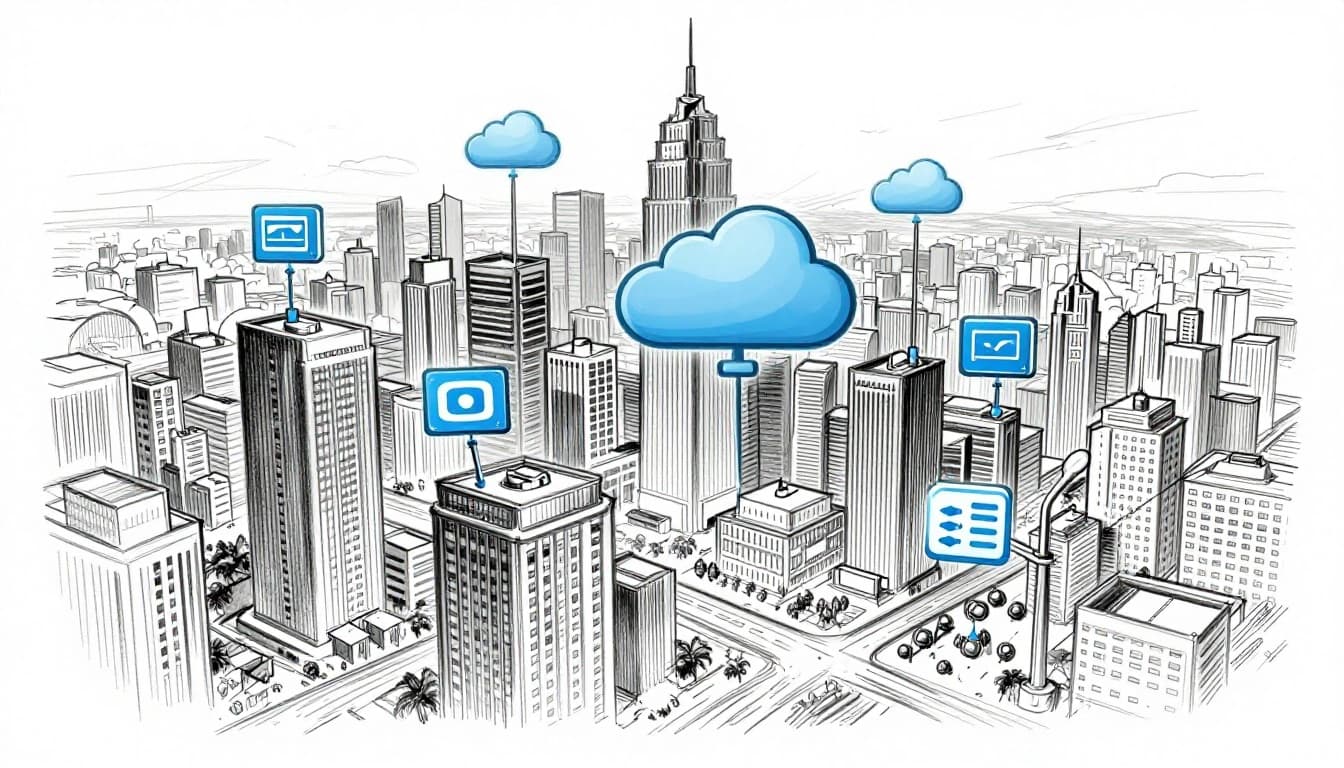
Cities usually combine three storage approaches. Think of it like this:
- Cloud storage is a giant online warehouse.
- Edge computing is a set of small on-site mini-factories.
- Databases with GIS are well-organized filing cabinets tied to maps.
Cloud Storage: The Go-To for Massive Scalability
Cloud storage is where cities keep large datasets and run heavy analytics. It makes sense when you need shared access across departments. For example, transit teams and public works teams may both need traffic patterns.
Cloud also helps when sensor counts grow. A city might start with a few thousand devices, then expand. With cloud, it’s easier to scale storage and compute without buying new hardware each time.
Cloud systems also support data sharing for projects. A city might let researchers analyze anonymized air quality data. They can do that without moving raw sensor feeds around.
Many smart city designs pair cloud with edge nodes. That way, urgent actions happen quickly at the source, while longer-term analytics run in the cloud. For a technical overview of how edge and cloud work together, see Edge and Cloud Computing in Smart Cities.
Edge Computing: Processing Data Right Where It’s Needed
Edge computing shifts part of the work closer to where data is created. Instead of sending everything to a central system, edge devices process locally first.
Why does that matter? Because some decisions can’t wait. A traffic signal may need a change within seconds. An emergency alert may need fast detection without long delays.
Edge systems often use small data centers near activity points, like rooftops, utility corridors, or bases of smart streetlights. They can filter data and store only what matters.
As a result, edge storage can reduce bandwidth costs. It can also support privacy by keeping sensitive raw data local. For more on why edge locations matter, review Role Of Edge Data Centers In Smart Cities.
Databases and GIS: Organizing Data for Smart Insights
Cloud and edge help with capacity and speed. But cities also need organization. That’s where databases and GIS come in.
A GIS (geographic information system) ties data to places. Instead of only storing “there was an incident,” the system can store “this incident happened here.” That makes planning easier. It also helps field teams act faster.
Cities often use real-time databases for operational data. Examples include:
- water system readings
- traffic counts and signal states
- safety events from cameras or emergency calls
Then dashboards and GIS layers help workers see patterns. A map can show congestion hotspots, flood risk areas, or repeated road damage locations.
If cloud is the warehouse and edge is the mini-factory, then GIS databases are the filing system that keeps everything linked to location.
How Cities Turn Raw Data into Smart Decisions
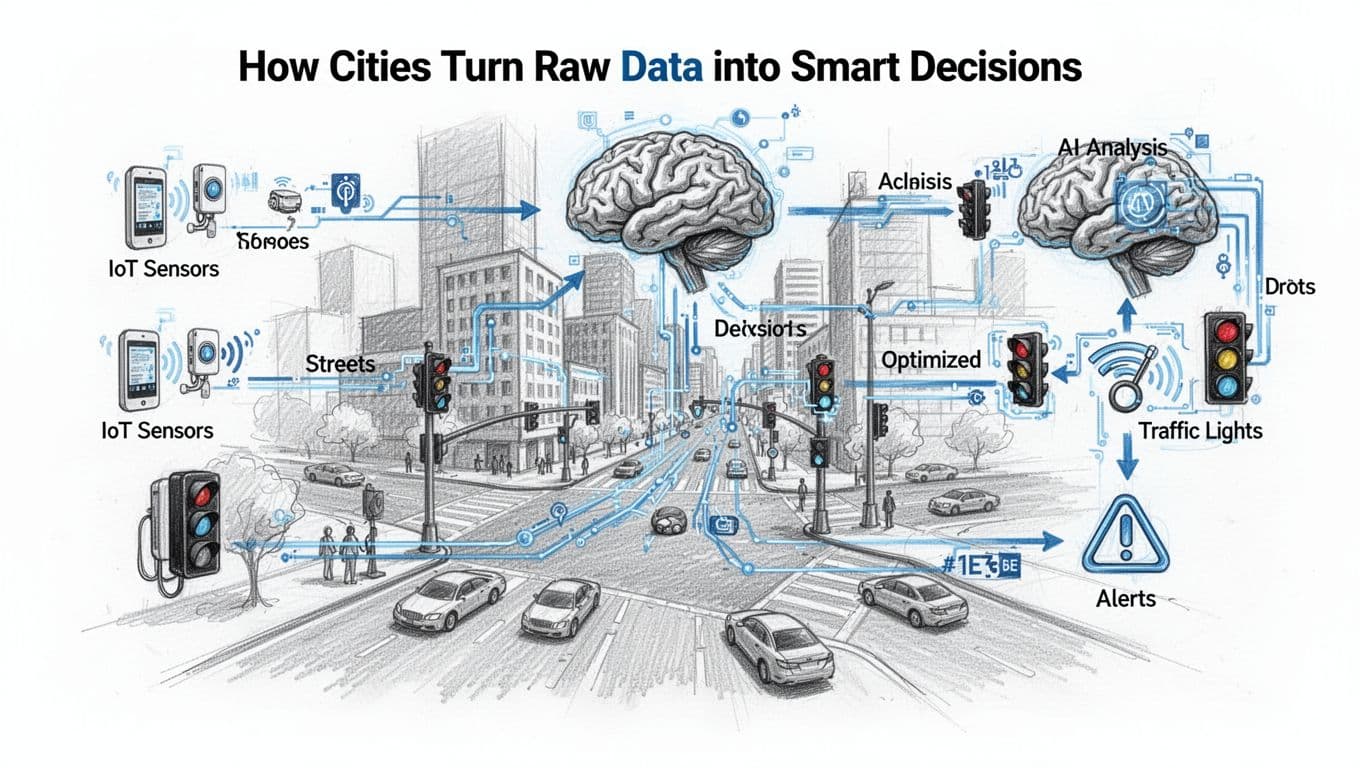
Storing data is only half the job. The other half is data management: collecting it, cleaning it, moving it to the right tools, and applying rules safely.
Most smart city programs use a repeatable pattern. Think of it like cooking. You don’t just stock ingredients. You prep them, combine them, then serve the dish.
Here’s the common flow cities aim for:
- Collect sensor and system data
- Clean the data (fix gaps, remove errors)
- Analyze with rules, models, or both
- Act using alerts, automation, or human workflows
Cities also set standards for what “good data” means. If one neighborhood sends timestamps differently, analytics can break. So governance rules often cover naming, formats, and retention periods.
AI and Machine Learning: Predicting Problems Before They Happen
AI helps smart cities move from “reacting” to “anticipating.” For example, models can predict bus delays using past traffic and weather patterns. Other models can spot unusual power usage that may suggest equipment problems.
In safety operations, AI may combine multiple data streams. A system can merge camera detections with incident reports to reduce false alarms. It can also support faster routes for fire response, because it knows which streets are likely to be blocked.
Still, AI needs good data. If records are missing or inconsistent, predictions become unreliable. That’s why smart city management often treats data quality as a first-class requirement.
For background on how information processing fits into IoT and cloud designs, see smart city information processing under internet of things and cloud computing.
Data Pipelines and Governance: Keeping Everything Clean and Secure
Data pipelines are the “pipes” that move information from sources to storage to analytics. In smart cities, pipelines do more than move data. They also:
- standardize formats
- batch or stream data based on need
- apply access controls
- track lineage (where data came from)
Governance is how cities avoid chaos. It defines who can access what data, when, and for what purpose. It also sets retention rules (how long data stays stored).
Because cities run multiple departments, pipelines also help prevent silos. Transit may store one view of traffic data. Public safety may store another. A good management design creates shared identifiers or mapping layers so teams work from the same ground truth.
Finally, secure handling matters because these systems touch real lives. A privacy-friendly design can store sensitive raw data longer only when needed, while sending safer summaries for routine tasks.
Real-World Wins: Smart Cities Putting Data to Work
You can learn a lot from what cities actually achieved. The data storage and management choices show up in outcomes like fewer delays, safer streets, and lower operating costs.
Cities also tend to pick solutions that match each use case. Fast decisions go to edge and real-time systems. Longer-term planning often uses cloud storage plus analytics.
Here are a few widely discussed examples.
Singapore Leads with AI Traffic and Energy Smarts
Singapore uses IoT sensing and AI to improve mobility and energy use. Traffic and transit systems generate frequent data, so edge processing can support near-real-time control. Meanwhile, cloud analytics can review trends over days and weeks.
Energy-related systems also benefit from smart data storage. Utility data often needs long history for billing, forecasting, and maintenance. That history can sit in cloud storage, while urgent alarms can be processed closer to meters.
As a result, cities can tune how services run without constant manual work. They can spot problems earlier too, because sensor patterns often reveal issues before they become outages.
If you want an example of how AI and smart data support green transport in Singapore, see Singapore: Optimising Green Transport with AI and Smart Data.
Barcelona’s IoT Bins Revolutionize Waste Collection
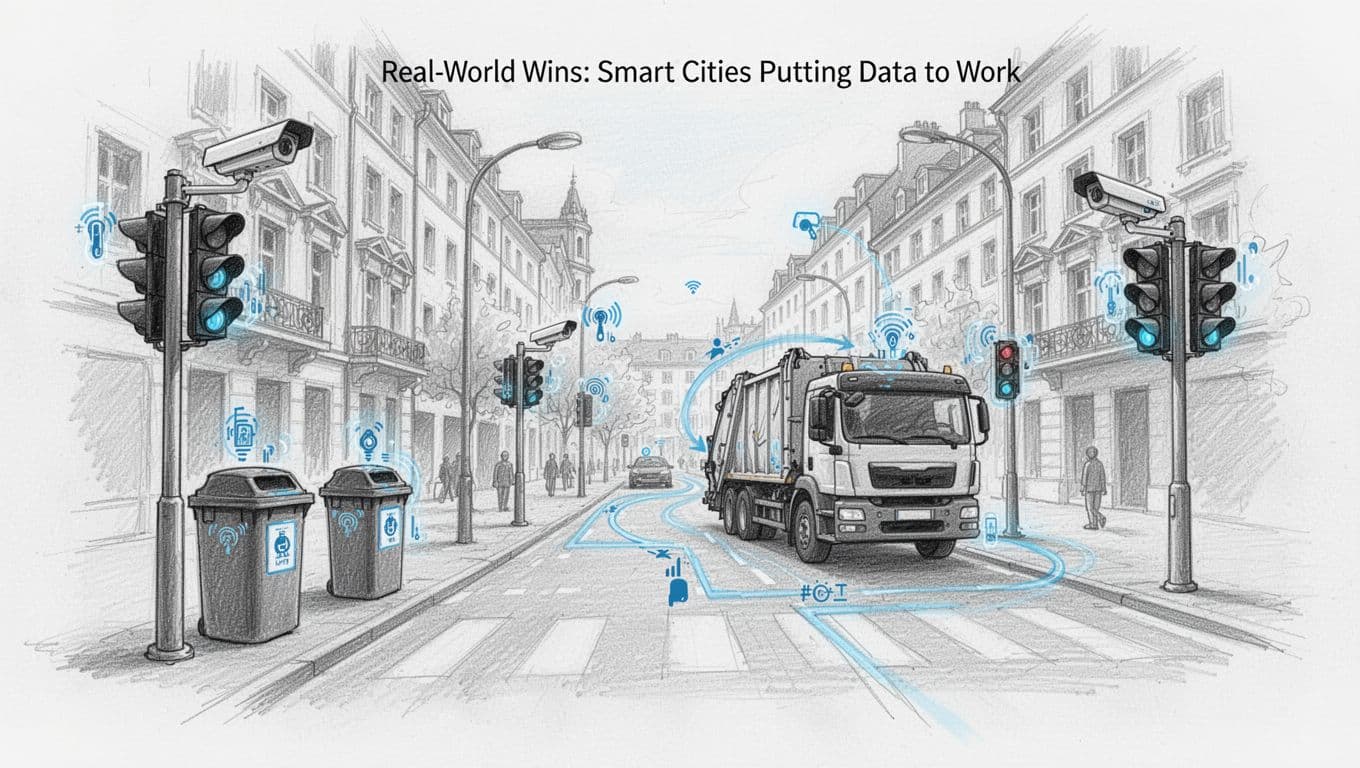
Waste management is a great example of “measure first, act fast.” Smart bins use sensors to detect fill levels. Then systems route trucks more efficiently.
Barcelona’s approach is often cited because it connects IoT bins to city operations, including transit and service planning. With better fill-level tracking, collection crews can reduce unnecessary trips and respond before overflow.
In fact, reports on Barcelona’s IoT work describe strong gains in collection efficiency after the city deployed connected systems across multiple services. For more context on how the IoT effort fit into city operations, read How Smart City Barcelona Brought the Internet of Things to Life.
Toronto and Others: Traffic and Parking Made Easy
Toronto focuses on traffic operations and intelligent signal ideas. It also publishes open datasets that can support planning and analysis. With good storage and well-managed datasets, third parties can build tools that help drivers and planners.
Modern traffic systems often combine:
- sensor data for flow and speed
- adaptive signal control logic
- incident detection from cameras or event reports
- centralized dashboards for operators
Other cities, including New York City and San Francisco, have also used connected systems for parking guidance and congestion reduction. Even when the tech varies, the management pattern stays similar: store the data in a way that supports both real-time decisions and longer-term improvement.
To make this concrete, here’s how the same idea appears across cities:
| City | Common smart city data use | Typical management goal | Reported outcome focus |
|---|---|---|---|
| Singapore | Traffic and energy monitoring | Fast detection and trend analysis | Smoother routes, fewer inefficiencies |
| Barcelona | Smart waste bins | Route optimization from fill data | Less overflow, fewer wasted trips |
| Toronto | Traffic operations planning | Improve signals and reduce jams | Better travel times and fewer delays |
Tackling Tough Challenges and What’s Next for Data in Cities
Smart city data brings real friction. You get more sensors, more formats, and more users. That makes storage and management harder, not easier.
At the same time, cities face public pressure. People want better services, but they also want privacy and transparency. So the next improvements depend on both technical design and clear rules.

Biggest Hurdles: From Overload to Privacy Worries
Cities deal with multiple risks at once. Data overload is a common starting point. You can collect terabytes quickly. But storage alone doesn’t solve decision speed, data quality, or costs.
Funding matters too. Edge hardware, connectivity, and maintenance can strain budgets. Skill gaps also slow progress, because cities need staff who understand both systems and data rules.
Finally, fairness and equity come into play. If models perform unevenly across neighborhoods, residents feel it. That becomes a public trust issue.
Here are the challenges that show up most often:
- Data growth that outpaces budget and staff
- Data quality problems, like missing or inconsistent sensor readings
- Silos between departments, vendors, and contractors
- Privacy and consent risks, especially with cameras and location data
- Ongoing security upkeep, since threats evolve
Good data management isn’t optional. It’s the difference between “smart” and “confusing.”
Strong Security and Governance to Build Trust
Security is more than a firewall. Smart city systems connect many device types, including street devices and utility meters. Those systems can become targets if security updates lag.
Governance helps by setting access policies and defining data use rules. Cities also need controls for encryption, audit logs, and role-based permissions. When teams can prove how data moved and who accessed it, audits become easier.
Interoperability matters too. If one department uses a vendor format that no one else can read, the city can’t build a shared picture.
Security and governance also support privacy. For example, cities may store raw feeds briefly, then keep only summaries for analytics. The goal is to minimize exposure without breaking service quality.
For broader research on privacy and security approaches in smart cities, see A systematic literature review on data privacy and security techniques in smart cities.
2026 Trends: Faster Networks and Smarter Systems Ahead
In 2026, many US projects focus on faster and more local processing. Edge computing is growing because it reduces delay. It also helps cities avoid sending every raw data point to central servers.
At the same time, cities plan for AI that runs closer to where data is produced. Instead of shipping full video or full sensor logs, edge AI can detect events and send only key signals.
Networks play a role too. More advanced cellular connections support high device density and low-latency alerts. That helps safety use cases like rapid incident detection.
Finally, cities keep building “digital twins” for planning. A digital twin uses models and maps to simulate outcomes. It depends on good storage and well-governed data, because the simulation is only as accurate as the inputs.
The big theme is simple: smart cities store data in layers, manage it with clear rules, and keep improving as new tech arrives.
Conclusion
Smart cities store and manage data using a mix of cloud storage, edge computing, and GIS-linked databases. Cloud supports big storage and shared analytics. Edge speeds up local decisions and can reduce delays. Databases and GIS keep information tied to places, so crews can act quickly.
Then management tools turn raw sensor data into decisions. Cities rely on clean pipelines, strong governance, and careful security. Real-world examples show how these choices affect day-to-day life, from traffic flow to waste collection.
Now the next step for many places is trust plus better performance. That means handling privacy well, improving data quality, and using newer network and edge AI features when they fit.
What smart city data projects are happening near you, and what would you want improved first?